Posts

Benefits of ACL Surgery & what precautions patients have to take after surgery

Image
Anterior Cruciate Ligament Surgery is a surgical tissue grafting replacement of Anterior Cruciate Ligament, located in the knee to restore its function after injury. The torn ligament can either be removed from the knee or preserved before reconstruction; an arthroscopic procedure (where the graft is passed inside the preserved rupture ligament) before reconstruction, an arthroscopic procedure. ACL repair is also a surgical option. This involves repairing the ACL by re-attaching it, instead of performing a reconstruction. Theoretical advantages of repair include faster surgery and a lack of donor side morbidity. but randomized control trials and long term data regarding re-rupture rates using contemporary surgical techniques are lacking. Many types of grafting options for ACL Reconstruction include Autograft (Employing bone or tissue harvested from the patient's body) . Another graft option is Allograft using bones or tissue from another's body, either from a cadaver or a live...

Common Orthopedic and Joint Problem

Image
Orthopedic conditions are injuries and diseases that affect the musculoskeletal system. This body system includes muscles, bones, nerves, joints , ligaments, or even tendons. Damage to any of these tissues or structures can cause a chronic orthopedic condition. Now a day, orthopedic and joint problems are very common in day-to-day life. Some common orthopedic problems include low back pain, knee pain, hamstring injuries, plantar fasciitis, scoliosis, hip fracture, and other arthritis conditions. These are some most common conditions everyone has faced or even heard about in their day-to-day life. Osteoarthritis is the most common joint problem over time arthritis can cause severe joint damage. It can affect people of all ages. Joint injuries can chronically cause and lead to an arthritic condition. Osteoarthritis, rheumatoid arthritis, Gout, and bursitis are some other joint conditions. Joint disorders are disease or injury that affects the joint. Injuries can happen because of overuse...

Treatment of Orthopedic and Joint Problems

Image
Some basic orthopedic problems are low back pain, the most common problem everyone faces in their day to day life. Other problems include knee pain, hamstring injury, plantar fasciitis, scoliosis, and different types of fractures, commonly hip fractures and arthritic conditions these are some common orthopedic problems one faces. Many joint problems do not require surgery; often they can be treated with a combination of exercises, rest, and anti-inflammatory medicines. There are various ways to accomplish the goal of orthopedic treatment the most basic way of treatment of orthopedic issues include" RICE" Therapy that is Resting, Icing (use of ice packs), Compression (compression of the region of pain/swelling with the help of bandaging) and Elevation combination of these few remedies can make you feel relief if you have a basic orthopedic problem or helps with simple joint injuries. Over-the-counter prescription of medications includes anti-inflammatory medicines, some types...

Diagnosis and treatment of shoulder dislocation

Image
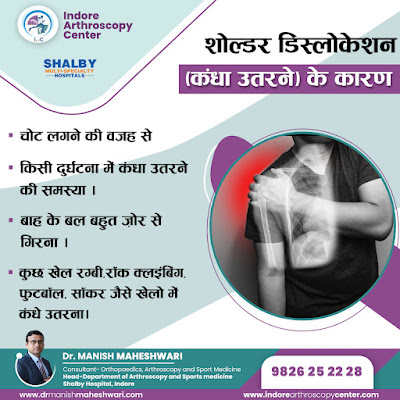
Shoulder dislocation is an injury in which your upper arm bone pops out of the cup-shaped socket. That's the part of the shoulder blade. The shoulder is the body's most mobile joint, and that's why it is prone to getting dislocated easily. For examining shoulder dislocation. Physical examination for shoulder dislocation includes inspection of affected areas of tenderness, swelling, and deformity. An X-RAY of your shoulder joint clears the broken bone or other damage caused because of shoulder dislocation other tests for diagnosing shoulder dislocation are EMG, MRI After diagnosing shoulder dislocation treatment should be initiated. This treatment includes close reduction; your doctor may try some gentle movements that can help to place your shoulder bone back to its original position. Depending on pain and spasms, your doctor will prescribe you muscles relaxants and pain killers, also general anaesthetic before shoulder manipulation. Another treatment regime includes surge...

Surgeries for Shoulder Dislocation

Image
Shoulder dislocation occurs when the ball of the shoulder joint is pulled or knocked out of its socket. In some cases, the shoulder bone can be placed back to its original place with the help of the conservative method. Trauma to the joint leads to severe pain, instability, and recurring dislocation in such cases shoulder surgeries are recommended to stabilize the area and minimize the risk of repetition of dislocations in the future. There are several different surgeries option for repairing shoulder dislocation, depending on the severity and location of the injury within the shoulder. Bankart Repair surgery This kind of shoulder surgery is needed if the dislocated shoulder moves towards the front of the body. The ring of cartilage surrounding the socket may have been torn out of the socket. It repairs the tear in cartilage and reattaches it to the socket. Depending on the severity of this surgery can also be performed arthroscopically or as an open procedure. Another shoulder disloc...

Shoulder Dislocation

Image
A shoulder injury is an injury in which the upper arm bone comes out of the shoulder blade socket, or we can say an injury in which the upper arm bone pops out of the ball-shaped socket; that's the part of your shoulder blade. The shoulder is the most mobile joint of the body; this makes it susceptible to getting dislocated. A dislocated shoulder requires prompt medical care; otherwise it causes serious secondary complications. Most people regain full shoulder function within a few weeks; however, once you have a dislocated shoulder, your joint is unstable and it gets prone to repeat dislocation. A dislocated shoulder's signs and symptoms may include a visibly deformed or out-of-place shoulder, swelling and bruising at the shoulder joint; a person suffering from intense pain, and also feeling instability to move the joint. Shoulder dislocation can also cause numbness, weakness, and a tingling sensation in the joint region or near the injury, such as your neck or down your arms...

Neck Strain & Neck Sprain

Image
Neck strain is an injury caused to muscle or tendon of the neck that generally occurs when these muscles or tendons get stretched too far & tear, whereas neck sprain is an injury to the ligament of the neck. Symptoms of neck sprain and strain are similar and can be based on the size of tears and location. Symptoms of neck sprain and neck strains involve pain in the back of the neck and upper shoulder that become more and more painful as you move your head. Difficulty in moving the head or rotating the neck is a critical symptom of neck strain or sprain. Another symptom includes headache that feels worse in the region of the back of the head. Increased irritability and fatigue are the major problems with neck strain & sprain. Other symptoms are decreased range of motion and neck stiffness, tingling, numbness, or weakness in arms or hands. Diagnosing neck strain or sprain includes a comprehensive physical examination, your doctor may ask you how the injury occurred, what your sym...